
Motor vehicle accidents are among the most common causes of personal injury worldwide. Navigating the aftermath of a crash involves more than just physical recovery; it requires a clear understanding of motor vehicle accident claims and the legal frameworks that govern them. This wiki guide provides a high-level overview of how these claims work, from the initial accident to the final settlement.
What is a Motor Vehicle Accident Claim?
A motor vehicle accident claim is a legal demand for compensation filed by a victim who has suffered physical, emotional, or financial harm due to a collision. These claims typically involve cars, motorcycles, trucks, bicycles, or pedestrians. The goal of the claim is to hold the at-fault party—usually another driver—accountable for the damages they caused.
In most jurisdictions, these claims are handled through insurance companies. However, if a fair agreement cannot be reached, the claim may escalate into a personal injury lawsuit. For a deeper look at the broad definition of these cases, you can visit the Wikipedia page on Personal Injury.
The Role of Negligence in Accident Claims
To succeed in a motor vehicle accident claim, the injured party (the plaintiff) must prove that the other party (the defendant) was negligent. Negligence is the legal term for a failure to exercise reasonable care, resulting in harm to others.
The Four Elements of Negligence
In the legal world, proving negligence requires meeting four specific criteria:
- Duty of Care: The driver had a legal obligation to operate their vehicle safely (e.g., following traffic laws).
- Breach of Duty: The driver failed that obligation (e.g., speeding, texting while driving, or running a red light).
- Causation: The driver’s actions directly caused the accident and subsequent injuries.
- Damages: The victim suffered actual losses, such as medical bills or lost wages.
If you want to learn more about these specific legal requirements, check out our guide on The Four Elements of Negligence Explained.
Common Types of Motor Vehicle Accidents
While every crash is unique, most claims fall into several well-defined categories. Understanding these can help determine who is likely at fault:
Rear-End Collisions
These occur when one vehicle hits the back of another. In most cases, the trailing driver is found at fault for failing to maintain a safe following distance.
Side-Impact (T-Bone) Accidents
Often occurring at intersections, these accidents usually involve one driver failing to yield the right of way or running a stop signal.
Multi-Vehicle Pileups
These are complex claims involving three or more cars. Determining liability often requires a detailed investigation by accident reconstruction experts.

Calculating Damages: What is Your Claim Worth?
One of the most critical aspects of motor vehicle accident claims is determining the “quantum,” or the total value of the damages. Damages are generally split into two categories: economic and non-economic.
Economic Damages
These are quantifiable financial losses that can be proven with receipts and invoices:
- Medical Expenses: Hospital stays, surgeries, medication, and future physical therapy.
- Lost Wages: Income lost while recovering and any loss of future earning capacity.
- Property Damage: The cost to repair or replace your vehicle and personal items.
Non-Economic Damages
These are subjective losses that do not have a fixed price tag:
- Pain and Suffering: Compensation for physical discomfort and chronic pain.
- Emotional Distress: Mental health impacts like anxiety, depression, or PTSD following the crash.
- Loss of Enjoyment: When injuries prevent you from participating in hobbies or activities you once loved.
To understand how these categories differ in practice, read our detailed breakdown on the Difference Between Economic and Non-Economic Damages.
Steps to Take After a Motor Vehicle Accident
The actions you take in the minutes and days following an accident can significantly impact the strength of your claim. Following a “wiki-style” checklist ensures no critical data is lost:
- Ensure Safety: Move to a safe area and check for injuries. Call emergency services immediately.
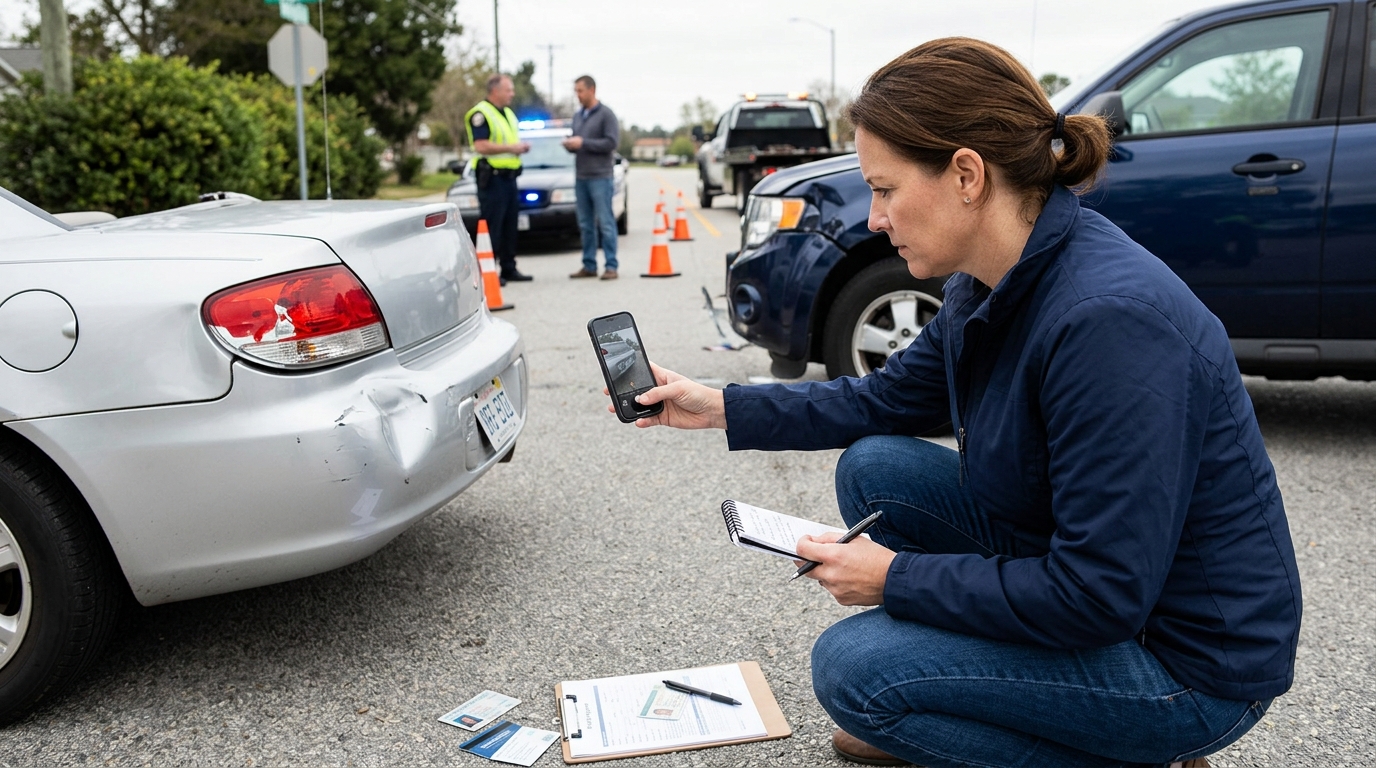
- Document the Scene: Take photos of vehicle damage, road conditions, skid marks, and traffic signs.
- Exchange Information: Get the names, contact details, and insurance information of all drivers involved.
- Identify Witnesses: If anyone saw the accident, ask for their contact information and a brief statement.
- Seek Medical Attention: Even if you feel “fine,” some injuries like whiplash or internal bleeding have delayed symptoms.
Conclusion
Understanding motor vehicle accident claims is the first step toward securing the compensation you deserve. By focusing on the facts, documenting evidence, and understanding the role of negligence, you can navigate the insurance process with confidence. As a wiki resource, we encourage you to explore our other categories to further your knowledge of personal injury law.