
Autonomous vehicle accident claims are becoming more important as driver assistance systems, robotaxis, and self-driving technology appear on more roads. These claims can be more complex than ordinary crash claims because responsibility may involve a human driver, vehicle manufacturer, software developer, fleet operator, or maintenance provider.
What Are Autonomous Vehicle Accident Claims?
Autonomous vehicle accident claims involve injuries or losses connected to vehicles using automated driving technology. These cases may involve fully driverless vehicles, robotaxis, test vehicles, or cars with advanced driver assistance systems. Some vehicles can steer, brake, change lanes, or monitor traffic under certain conditions, but the level of human involvement can vary.
This distinction matters because a crash involving automated technology may not follow the same liability pattern as a standard collision. In a typical crash, the focus is often on whether a driver was speeding, distracted, impaired, or careless. In an autonomous vehicle case, the investigation may also review software behavior, sensor performance, data logs, system warnings, mapping errors, fleet oversight, and driver monitoring.
The National Highway Traffic Safety Administration explains that its Standing General Order on crash reporting requires certain manufacturers and operators to report crashes involving automated driving systems or SAE Level 2 driver assistance systems. This shows why these claims have become a growing part of personal injury law.
For related background, read our guide on motor vehicle accident claims.
Why Autonomous Vehicle Claims Are Different
Autonomous vehicle claims can involve both traditional negligence and product liability issues. A human driver may still be responsible if they ignored warnings, misused driver assistance features, or failed to remain attentive. At the same time, a manufacturer or technology company may be reviewed if the automated system failed to detect a hazard, responded too late, or behaved in an unsafe way.
The SAE Levels of Driving Automation help explain the difference between driver assistance and higher levels of automation. This is important because many vehicles marketed with advanced features still require human supervision. Confusion about these limits may become a major issue after a crash.
Common Autonomous Vehicle Accident Scenarios
Autonomous vehicle accident claims may arise from several types of incidents. A vehicle using partial automation may fail to slow for stopped traffic. A driver may rely too heavily on hands-free technology. A robotaxi may make an unsafe turn, stop unexpectedly, or fail to respond properly to unusual road conditions. A pedestrian, cyclist, passenger, or nearby driver may suffer injuries even if they were not inside the autonomous vehicle.
The Insurance Institute for Highway Safety has published partial automation safeguard ratings that focus on driver monitoring, attention reminders, emergency procedures, and limits on feature use. These safeguards may become relevant when reviewing whether a vehicle system gave proper warnings or required enough human involvement.
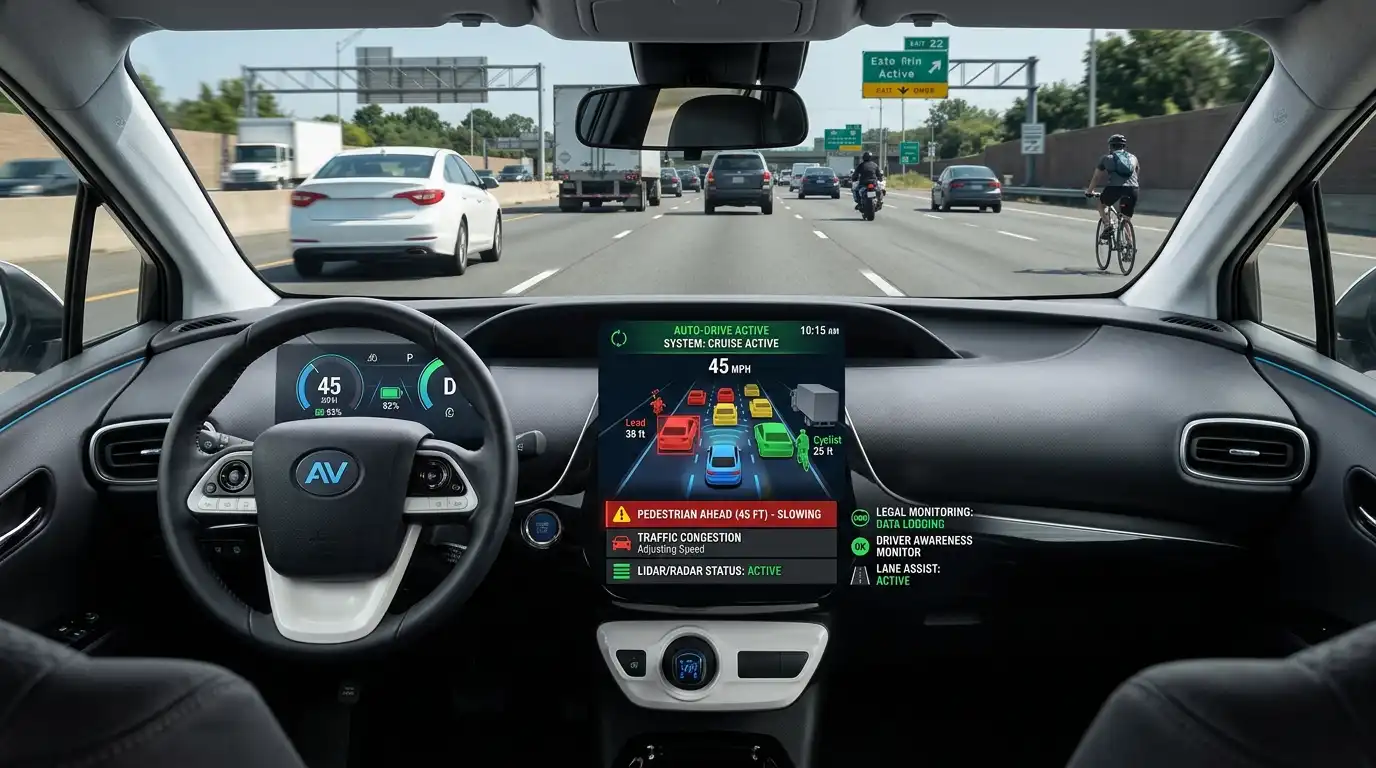
Who May Be Liable In An Autonomous Vehicle Accident?
Liability depends on the facts of the crash. These claims may involve one responsible party or several. A careful investigation usually looks at the conduct of the human driver, the design of the vehicle, the performance of the software, maintenance records, and any company policies connected to the vehicle’s operation.
The Human Driver Or Vehicle Owner
Many vehicles with advanced driver assistance still require a human driver to supervise the road. If the driver ignored system alerts, looked away from traffic, misused the technology, or failed to take control when needed, they may share responsibility for the crash.
Driver conduct still matters in these cases. A person cannot assume that partial automation removes the need for reasonable care. Our guide on the four elements of negligence explains duty, breach, causation, and damages in more detail.
The Vehicle Manufacturer
A manufacturer may be reviewed if the vehicle had a design defect, manufacturing defect, sensor issue, braking problem, or unclear warning system. In these cases, the claim may involve product liability principles along with negligence. The question may become whether the vehicle was designed, tested, labeled, and deployed with reasonable safety protections.
Software Developers And Technology Providers
Autonomous vehicles depend on cameras, radar, lidar, mapping tools, machine learning systems, and software updates. If a crash appears connected to perception, planning, mapping, or system decision-making, the companies behind the software may become part of the investigation.
Fleet Operators And Maintenance Providers
Robotaxi companies, delivery fleets, and testing operators may also face review. These companies may control maintenance schedules, remote monitoring, safety protocols, software updates, and vehicle deployment areas. If poor oversight contributed to the crash, liability may extend beyond the vehicle itself.
Evidence That Matters In Autonomous Vehicle Claims
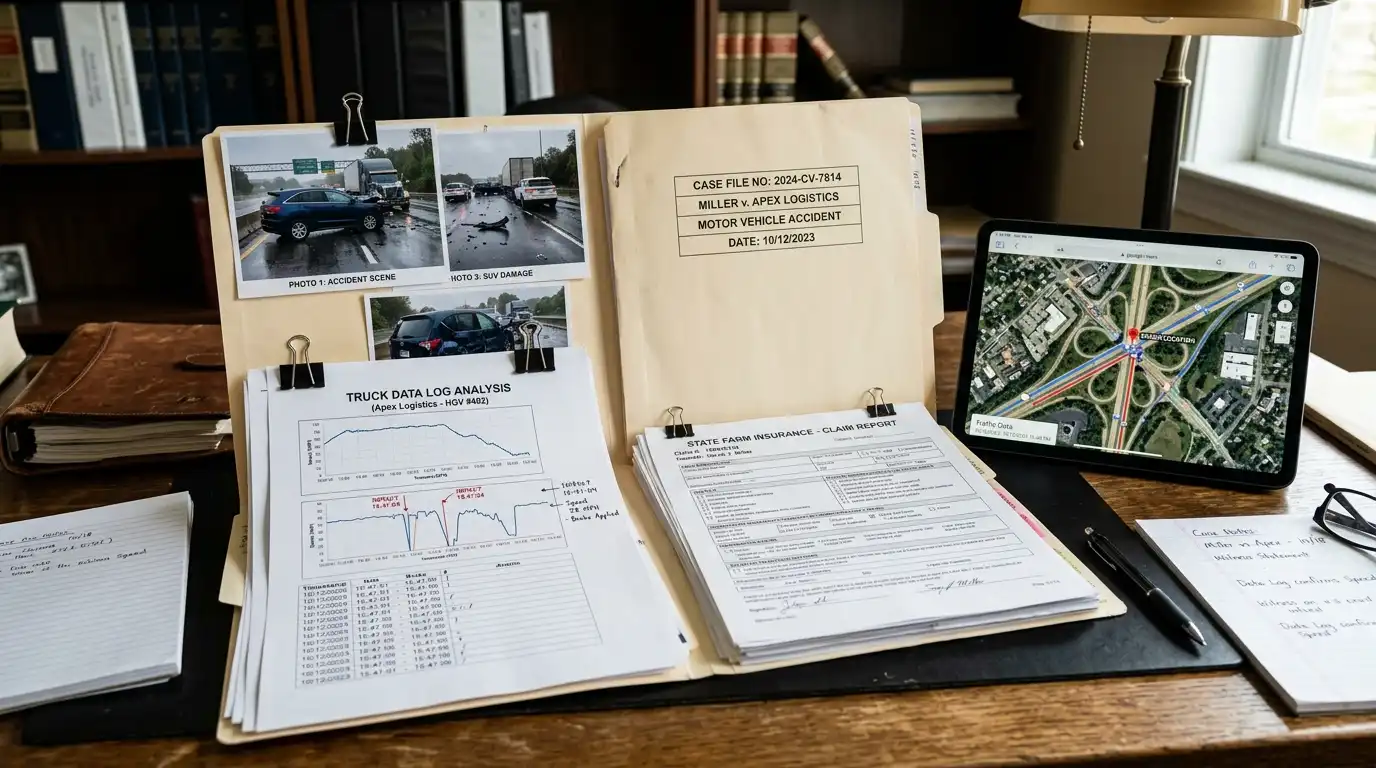
Evidence in these claims can be more technical than evidence in ordinary car crashes. Important records may include police reports, photos, videos, medical records, insurance records, witness statements, vehicle data logs, onboard camera footage, software update history, and system warning records.
Digital evidence can become especially important. Many automated systems collect data about speed, braking, lane position, steering, driver attention, object detection, GPS location, and system engagement. The Federal Trade Commission has also noted that connected cars can collect sensitive information, including location and biometric data, in its discussion of cars and consumer data.
Because this data may be controlled by a manufacturer, fleet company, or technology provider, early preservation can be important. A claim may become harder to evaluate if data is deleted, overwritten, or unavailable.
Reporting Rules And Public Safety Records
Government records may also help explain how autonomous vehicle crashes are tracked. The California DMV states that manufacturers testing autonomous vehicles must report every collision involving one of their vehicles that results in property damage, bodily injury, or death. Its autonomous vehicles page includes information on permits, testing, deployment, and collision reports.
The National Transportation Safety Board also investigates some serious crashes involving driver assistance technology. In 2026, the NTSB reported that overreliance on a hands-free partial automation system contributed to two fatal crashes involving Ford BlueCruise. You can review the agency’s statement through the NTSB automation overreliance release.
Damages In Autonomous Vehicle Accident Claims
Damages in autonomous vehicle accident claims may include medical bills, lost income, future care costs, property damage, physical pain, emotional distress, reduced mobility, and other losses. The value of a claim depends on the severity of the injury, available evidence, insurance coverage, and proof connecting the crash to the responsible party.
Our article on economic and non-economic damages explains the difference between financial losses and personal losses. Autonomous vehicle claims may include both categories, especially when injuries require ongoing treatment or affect daily activities.
Insurance Issues Can Be Complicated
Insurance may involve several layers. A human driver’s auto policy may apply if driver error caused the crash. A manufacturer or fleet operator may have commercial coverage. A product liability claim may involve a company connected to the vehicle, software, or system design. In some cases, several insurers may dispute which policy applies.
What To Do After An Autonomous Vehicle Crash
Get Medical Care And Report The Crash
Medical records create an important timeline between the crash and the injuries. A police report or incident report can also help document the vehicles, people, location, and early statements.
Preserve Photos And Digital Evidence
Photos of the vehicle, roadway, traffic signals, weather, injuries, and nearby cameras may help explain what happened. If an app, vehicle screen, or ride receipt shows trip data, save screenshots. Keep copies of emails, receipts, insurance messages, and repair records.
Identify The Technology Involved
It may help to record the vehicle make, model, license plate, fleet name, ride service name, and any visible autonomous system branding. The exact system involved can affect which records may matter.
Final Thoughts
Autonomous vehicle accident claims are an emerging type of personal injury claim because they combine traffic law, negligence, product safety, software systems, and digital evidence. These cases can involve more than one responsible party, and the strongest analysis often depends on preserving data early, reviewing technical records, and connecting the injury to a specific failure or unsafe action.
As automated technology becomes more common, personal injury law may continue to adapt. For readers trying to understand this claim type, the key point is simple: autonomous vehicle crashes are not only car accident cases. They may also be technology, product liability, and data evidence cases.
For more on technology-related liability, read our article on AI and smart devices in personal injury cases.